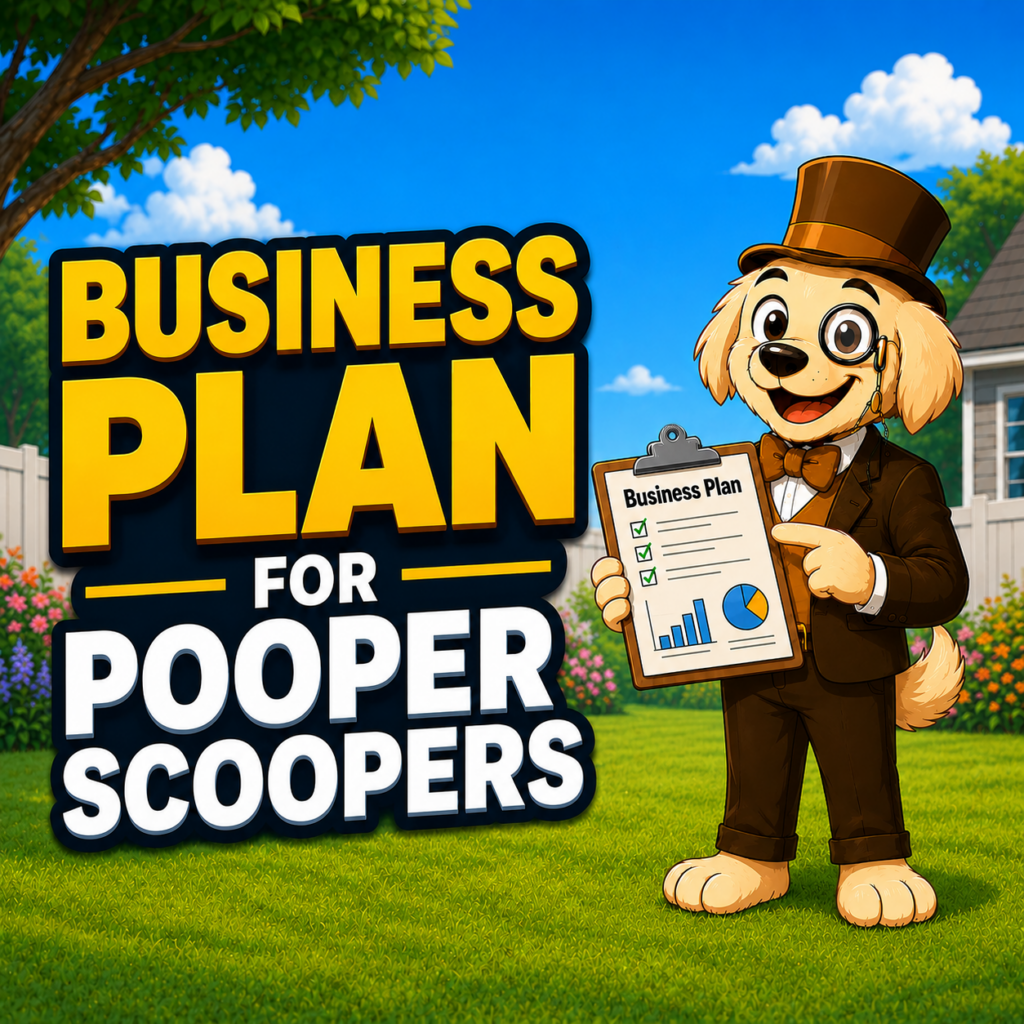
Starting a pooper scooper business does not require a complicated 40-page business plan.
In fact, one of the biggest mistakes new business owners make is spending too much time planning and not enough time taking action. A business plan can be helpful, but it should not become an excuse to delay getting your first customers.
For a pooper scooper business, your plan should be simple. You need to know what service you are offering, who you are serving, what you will charge, where you will operate, how you will get customers, and how you will handle the basic operations of the business.
That is it.
You can improve the plan as you go. The most important thing is to get the basics mapped out, then start testing the business in the real world.
If you are still in the early research stage, you may want to start with our full guide on how to start a pooper scooper business. This article is focused specifically on what to include in your business plan before you start taking action.
Quick Answer: What Should Be in a Pooper Scooper Business Plan?
A simple pooper scooper business plan should include your service offer, target market, service area, pricing, startup costs, marketing plan, operating plan, billing system, and basic revenue goals.
You do not need to make it overly formal. The goal is to create a simple roadmap that helps you make better decisions and avoid obvious mistakes.
Here are the main sections to think through:
| Business Plan Section | What to Decide |
|---|---|
| Business overview | What kind of pooper scooper business are you building? |
| Services offered | Weekly service, twice-weekly service, initial cleanups, add-ons, or commercial work |
| Target customer | Who are you trying to serve? |
| Service area | What neighborhoods, cities, or zip codes will you cover? |
| Pricing | What will you charge for recurring service and initial cleanups? |
| Startup costs | What will you need to spend before getting customers? |
| Marketing plan | How will people find and sign up for your service? |
| Operations plan | How will you clean yards, route jobs, bill customers, and handle issues? |
| Revenue goals | What does success look like in the first 30, 60, or 90 days? |
The plan does not need to be perfect. It just needs to be clear enough to help you take action.
1. Business Overview
The first part of your business plan should explain what kind of business you are building.
For most new owners, the simplest model is a residential recurring dog waste removal service. That means you clean customer yards on a set schedule, usually weekly, and charge a recurring monthly price.
You do not need to start with every possible service. In our opinion, most new pooper scooper business owners should start with the core service first: cleaning dog poop from residential yards.
You can always add more later.
Your business overview might answer questions like:
- What is the name of the business?
- What city or area will you serve?
- Will you start part-time or full-time?
- Will you do the work yourself at first?
- Will you focus on residential customers, commercial customers, or both?
- What makes your business different from other local options?
If you are still deciding on a name, read our guide on choosing your pooper scooper business name.
2. Services Offered
Next, decide what services you are going to offer.
For most new pooper scooper businesses, the core offer should be simple:
- Weekly dog waste removal
- Twice-weekly dog waste removal
- Every-other-week dog waste removal
- Initial cleanups for new customers
Weekly service is usually the best foundation for a recurring route. It is easy for customers to understand, easier to schedule, and usually keeps yards in better condition.
You may eventually offer add-ons like deodorizing, dog run cleaning, litter box service, or commercial pet waste station service. However, you do not need to start with everything.
In fact, starting too broad can make the business harder than it needs to be.
A simple service offer is easier to sell, easier to route, and easier to explain.
3. Target Customer
Your business plan should also define who your ideal customer is.
A pooper scooper business can technically serve anyone with a dog and a yard, but that does not mean every dog owner is equally valuable.
Your best customers are usually people who value convenience and are willing to pay for recurring service.
That might include:
- Busy families
- Dual-income households
- Elderly customers
- People with multiple dogs
- Customers with large dogs
- Pet owners who dislike cleaning the yard
- Homeowners who already pay for lawn care or other home services
You do not need to overcomplicate this, but it helps to know who you are trying to reach. Your target customer will influence your pricing, marketing, service area, and messaging.
4. Service Area
Your service area matters more than many new owners realize.
A pooper scooper business is a route-based business. That means your profit is not just based on how many customers you have. It is also based on how close those customers are to each other.
A route with 30 customers close together is usually much better than 30 customers spread across an entire metro area.
When planning your service area, think about:
- Which cities or neighborhoods you want to serve
- How far you are willing to drive
- Whether the area has enough dog owners
- Whether the neighborhoods have yards
- How dense the routes could become over time
- Whether you can realistically serve the area each week
One common mistake is accepting customers too far away just because they are willing to pay. That might feel good early on, but scattered customers can hurt your route efficiency and make the business harder to grow.
Start with a focused service area. You can expand later.
5. Pricing Plan
Pricing is one of the most important parts of your business plan.
If you price too low, you may get customers but struggle to make real money. If you price too high for your market, it may be harder to get traction early on.
For most pooper scooper businesses, we recommend using a flat monthly rate based on service frequency and number of dogs. This keeps the pricing easy for customers to understand and easier for your business to manage.
Your pricing plan should include:
- Weekly service pricing
- Twice-weekly service pricing
- Every-other-week service pricing
- Additional dog pricing
- Initial cleanup pricing
- Large yard or difficult property surcharges
- Any discounts or promotions you plan to offer
Do not just copy the cheapest competitor in your market. Your pricing needs to support your labor, route time, overhead, marketing, and profit.
For a deeper breakdown, read our guide on how much pooper scoopers charge.
6. Startup Costs
A pooper scooper business can be fairly inexpensive to start compared to many other local service businesses, but it is not completely free.
Your startup costs may include:
- Business registration
- Insurance
- Website or landing page
- Phone number
- Payment processing
- Basic tools
- Buckets or containers
- Bags
- Gloves
- Disinfectant
- Vehicle setup
- Marketing
- Software or CRM
You do not need to buy everything on day one, but you should have a basic budget before you start.
The goal is to know how much money you need to launch and how many customers you need to break even.
You should also understand your earning potential before setting goals. For more on that, read our guide on how much money pooper scooper businesses can make.
7. Legal and Operating Setup
Your business plan should include a basic legal and operating checklist.
This does not need to be complicated, but you should think through the basics before taking customers.
You may need to consider:
- Business registration
- Local business license
- EIN or tax setup
- General liability insurance
- Waste disposal rules
- Business bank account
- Payment processor
- Customer service policies
- Basic safety procedures
In most areas, you probably do not need a special “pooper scooper license,” but you may still need a general business license or local registration depending on where you operate.
Requirements vary by city, county, and state, so always check your local rules. For more detail, read our guide on pooper scooper business license and legal requirements.
8. Marketing Plan
A simple marketing plan should explain how you are going to get your first customers.
You do not need a perfect long-term marketing strategy before you start, but you do need a plan to generate leads.
Some common marketing channels for a pooper scooper business include:
- Google Business Profile
- Local SEO
- Google Ads
- Facebook Ads
- Yard signs
- Door hangers
- Neighborhood Facebook groups
- Customer referrals
- Partnerships with dog-related businesses
- Review requests
For most new owners, the first goal is not to dominate every marketing channel. The first goal is to get enough customers to prove that people in your market will pay for the service.
Once you know your pricing works and you can service customers reliably, you can start putting more money and effort into marketing.
9. Billing and Customer Policies
Billing is one of the most important parts of a recurring service business.
A pooper scooper business may seem simple, but if you do not collect payment consistently, cash flow can become a problem fast.
Your business plan should answer:
- Will customers pay monthly, weekly, or per visit?
- Will you require a card on file?
- Will you bill before or after service?
- What happens if a payment fails?
- What is your cancellation policy?
- What happens if a gate is locked?
- What happens if a dog is outside?
- What is your weather policy?
- How will you handle skipped services?
Clear billing and customer policies make the business easier to manage and help prevent misunderstandings.
For more detail, read our customer billing guide for pet waste removal businesses.
10. Operations Plan
Your operations plan explains how the work will actually get done.
This is where many new owners underestimate the business. Scooping yards is simple, but building a reliable route-based service business still requires systems.
Your operations plan should include:
- What days you will service customers
- How you will build routes
- How you will track completed jobs
- How customers will communicate with you
- What tools and supplies you will use
- How you will handle waste disposal
- How you will keep equipment clean
- What you will do if you miss a yard
- How you will document gates, pets, or service issues
You do not need advanced systems on day one, but you do need a basic process.
The earlier you build good habits, the easier it will be to grow beyond yourself later.
11. Revenue and Profit Goals
Your business plan should include simple goals.
They do not need to be perfect projections, but you should have a rough idea of what you are trying to accomplish.
For example, your first goals might be:
| Time Period | Example Goal |
| First 30 days | Get your first 5 to 10 customers |
| First 60 days | Build a small weekly route |
| First 90 days | Reach consistent recurring monthly revenue |
| First 6 months | Decide whether to stay part-time or push harder |
| First year | Build a profitable recurring customer base |
The exact numbers will depend on your market, pricing, schedule, and goals.
The important thing is to avoid vague goals like “make money” or “get customers.” Give yourself specific targets so you know whether the business is working.
Common Pooper Scooper Business Plan Mistakes
The biggest mistake is spending too much time on the plan and not enough time taking action.
A business plan is useful, but customers are what prove the business. You can plan forever, but you will learn more from getting your first few customers than you will from endlessly editing a document.
Other common mistakes include:
- Making the plan too complicated
- Trying to offer too many services right away
- Serving too large of an area
- Underpricing the service
- Ignoring route density
- Skipping insurance or local requirements
- Not having a billing system
- Not setting customer policies
- Waiting too long to start marketing
- Setting goals without understanding profit margins
The goal is not to create the perfect business plan. The goal is to create a simple plan that helps you take smarter action
Get the Full Pooper Scooper Business Plan Template
This article gives you the basic pieces of a pooper scooper business plan, but the full template, budgeting tools, startup checklists, and projections are available inside Poop Scoop Millionaire™.
Poop Scoop Millionaire™ is our training platform and community for people who want to start, grow, or improve their own pooper scooper business.