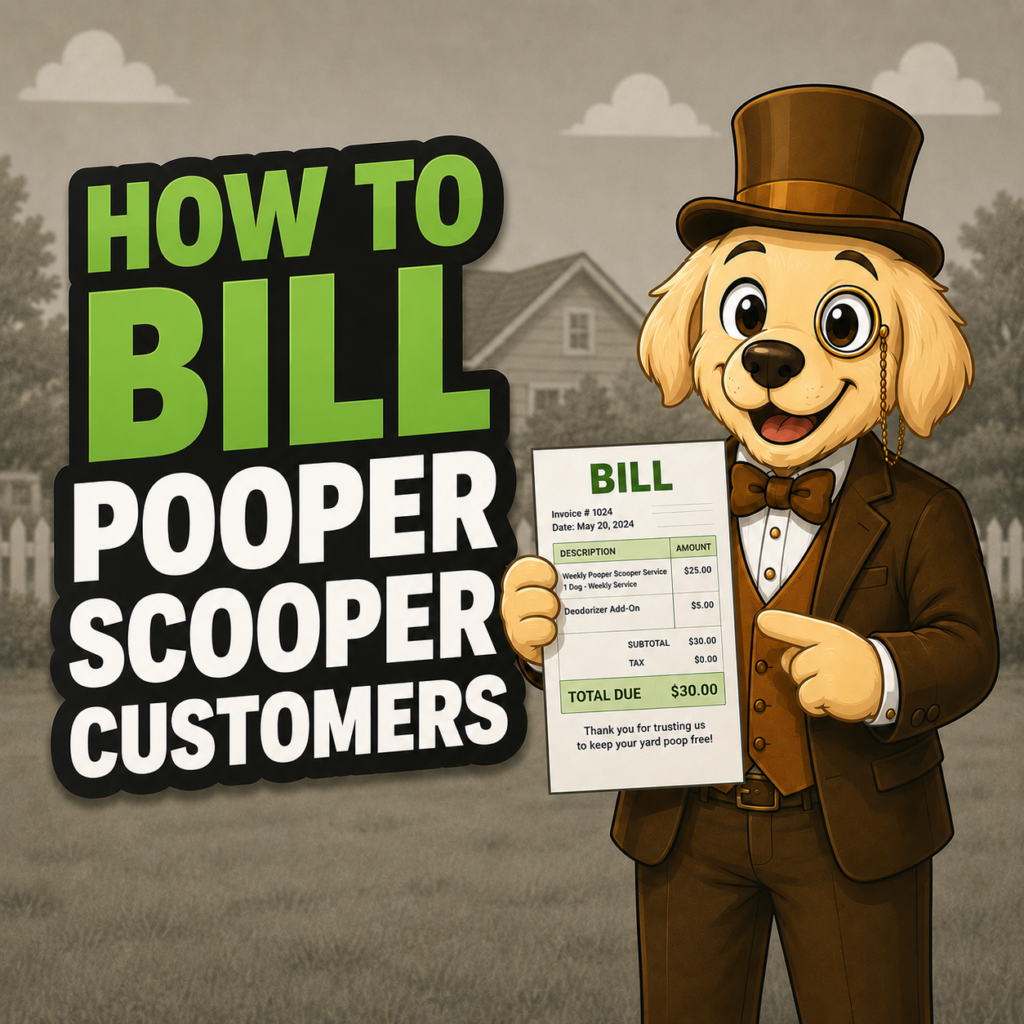
Billing may not be the most exciting part of running a pooper scooper business, but it can make a big difference in your cash flow, customer retention, and day-to-day stress.
This guide is about how to collect payments from customers, not how much to charge. If you are looking for pricing help, read our full guide on how much pooper scoopers charge.
For billing, we almost always recommend keeping it simple: require a card on file, bill before service is performed, and use recurring billing whenever possible.
The goal is to avoid chasing payments, reduce awkward conversations, and make sure your business gets paid for the work it is doing.
Quick Answer: What Is the Best Way to Bill Pooper Scooper Customers?
The best way to bill pooper scooper customers is to require a card on file and pre-bill customers before service is performed.
For most pooper scooper businesses, collecting payment after the work is done creates unnecessary problems. If you clean the yard first and then try to collect payment later, you may end up chasing customers, dealing with failed payments, sending reminders, or deciding whether to pause service.
Pre-billing solves a lot of that.
A simple billing setup looks like this:
- Customer signs up for recurring service
- Customer adds a card on file
- Customer is billed before service is performed
- Service continues as long as payment is successful
- Failed payments are handled before more service is completed
We also recommend encouraging longer billing intervals when possible, such as quarterly or annual billing.
Longer billing cycles can improve cash flow, reduce payment issues, and may help reduce churn because customers are committing for a longer period of time. That extra cash flow can also help you invest back into marketing, equipment, hiring, and growth.
Monthly billing can still work, but if you can get more customers onto quarterly or annual billing, it can make the business much easier to manage.
Why Pre-Billing Is Usually Best
For most pooper scooper businesses, pre-billing is the cleanest way to collect payments.
That means customers pay before the service is performed, not after.
This matters because dog waste removal is a recurring route-based service. If you clean first and collect later, you can quickly end up chasing small payments from multiple customers. That creates extra admin work, awkward conversations, and cash flow problems.
Pre-billing helps you avoid:
-
Customers receiving service without paying
-
Chasing invoices after the work is done
-
Continuing service for customers with failed payments
-
Awkward collection calls or messages
-
Cash flow gaps
-
Unclear billing expectations
The rule should be simple: if the customer is not paid up, they should not be on the active service schedule.
This does not need to be harsh. It just needs to be clear.
A simple policy might be:
“Recurring service is billed in advance. A valid card must remain on file, and service may be paused if payment is not successfully processed.”
That type of policy protects your business and sets clear expectations from the start.
Require a Card on File
A card on file should be standard for a pooper scooper business.
If you let customers pay manually every time, you are creating more work for yourself and making it easier for payments to be missed.
A card-on-file system makes billing more predictable.
It also makes the customer experience easier. The customer does not have to remember to pay every week, and your team does not have to remind them over and over again.
Before starting service, the customer should:
-
Choose a plan
-
Agree to your billing terms
-
Add a card on file
-
Pay any required initial cleanup or first billing cycle
-
Get added to the schedule
This keeps the process simple.
If you are still working through your pricing, read our guide on how much pooper scoopers charge.
Monthly, Quarterly, and Annual Billing
Monthly billing is the most common option, but it is not always the best option for cash flow or customer retention.
Longer billing intervals, such as quarterly or annual billing, can be a great option for a pooper scooper business.
Quarterly and annual billing can help:
-
Improve cash flow
-
Reduce payment failures
-
Lower monthly billing admin
-
Reduce churn
-
Help customers commit longer
-
Give you more cash to reinvest into marketing, equipment, and hiring
At the same time, you still need to deliver the service. If a customer pays annually, that money is not just “extra profit” on day one. You are being paid upfront for future work.
Still, longer billing cycles can make the business much easier to manage.
A simple billing structure could include:
| Billing Option | Best For |
|---|---|
| Monthly | Simple recurring billing and lower upfront cost |
| Quarterly | Better cash flow and fewer payment events |
| Annual | Strongest cash flow and potentially lower churn |
You can also offer a small discount for longer billing intervals if it makes sense for your business.
The key is to make sure your pricing, billing, and cancellation policy all work together.
How to Bill Initial Cleanups
Initial cleanups should be handled separately from normal recurring billing.
A yard that has not been cleaned in weeks or months is not the same as a maintained weekly customer. Initial cleanups can take much longer and should be priced accordingly.
There are a few ways to handle this:
-
Charge an upfront initial cleanup fee
-
Offer a discounted initial cleanup with recurring service
-
Include the initial cleanup for free with recurring service
-
Charge a custom price for heavy cleanups
The right choice depends on your market, your offer, and how aggressive you want to be with customer acquisition.
If you offer a free or discounted initial cleanup, make sure the customer signs up for recurring service and has a card on file before the cleanup is performed.
Otherwise, you may end up doing the hardest cleanup for the least committed customer.
For more help on cleanup pricing, read our full pooper scooper pricing guide.
How to Bill Customers Who Start Mid-Month
New customers will not always start perfectly on the first day of a billing cycle.
That is okay.
You just need a simple policy for mid-month starts.
Common options include:
-
Charge a prorated amount for the rest of the month
-
Charge the first full month upfront and adjust the next billing cycle
-
Charge the initial cleanup separately, then start recurring billing on the next cycle
The most important thing is consistency.
Do not make a custom billing arrangement for every customer if you can avoid it. That creates confusion and makes your billing harder to manage as you grow.
A simple approach is to collect the initial cleanup or first service payment upfront, then start the customer on your normal recurring billing cycle.
What to Do When a Payment Fails
Failed payments are part of running a recurring service business.
Cards expire. Banks decline charges. Customers change payment methods. Sometimes people simply do not have enough funds available.
The key is to handle failed payments quickly.
A simple failed payment process might look like this:
-
Payment fails
-
Customer gets an automatic notification
-
Customer is asked to update their card
-
Service is paused if payment is not fixed
-
Service resumes once payment is successful
The biggest mistake is continuing to service customers who are not paying.
If you keep cleaning the yard after payments fail, you are training the customer that payment is optional. You are also creating more money to collect later.
Keep it simple: no successful payment, no continued recurring service.
You can be polite and professional while still protecting the business.
Monthly Invoices vs. Automatic Billing
Some business owners think they need to send invoices and wait for customers to pay.
That can work in some industries, but it is usually not ideal for pooper scooper service.
This is a small-ticket recurring service. You do not want to spend your time manually collecting payments from dozens or hundreds of customers.
Automatic billing is usually better.
Instead of sending an invoice and hoping the customer pays, the customer’s card is charged automatically based on their billing cycle.
This creates a much cleaner system:
-
Customer agrees to the plan
-
Card is saved on file
-
Billing runs automatically
-
Failed payments are flagged
-
Service continues only when the account is paid
You may still send receipts, payment notices, or invoices for recordkeeping, but the goal should be automatic collection whenever possible.
Billing Policies Every Pooper Scooper Business Should Have
Your billing policies do not need to be complicated, but they should be clear.
Customers should understand how billing works before service starts.
At a minimum, your billing policies should explain:
-
When customers are billed
-
Whether service is prepaid
-
Whether a card on file is required
-
How initial cleanups are charged
-
What happens if payment fails
-
Whether refunds are offered
-
How cancellations work
-
Whether customers can pause service
-
How billing works for skipped visits or weather delays
This protects both the customer and the business.
It also helps your team answer questions consistently.
If you are still setting up the legal and policy side of your business, you may also want to read our guide on pooper scooper business license and legal requirements.
Common Billing Mistakes
Billing is simple when the system is clear, but there are a few mistakes new owners should avoid.
Cleaning Before Collecting Payment
This is the biggest mistake.
If you clean first and collect later, you will eventually end up chasing payments.
Not Requiring a Card on File
Manual payments create extra work and make failed payments more common.
A card on file should be standard for recurring service.
Continuing Service After Failed Payments
If payment fails and the customer does not fix it, pause service.
Do not keep adding more unpaid work.
Making Too Many Custom Billing Deals
Custom billing arrangements may feel harmless when you are small, but they become hard to manage as you grow.
Keep your billing rules simple and consistent.
Not Encouraging Longer Billing Cycles
If every customer is monthly, your cash flow may be more limited.
Quarterly and annual billing can improve cash flow and may reduce churn.
Not Explaining Billing Upfront
Customers should know how billing works before service starts.
Clear expectations prevent confusion later.
Pooper Scooper Billing FAQs
Should pooper scooper businesses bill before or after service?
Pooper scooper businesses should usually bill before service. Pre-billing helps avoid chasing payments and makes sure the customer is paid up before the work is performed.
Should I require a card on file?
Yes. A card on file makes recurring billing easier, reduces missed payments, and creates a smoother customer experience.
Is monthly billing or per-visit billing better?
Monthly billing is usually better for recurring pooper scooper service because it creates predictable revenue and is easier for customers to understand. Per-visit billing can work, but it may create more billing events and more admin work.
Should I offer quarterly or annual billing?
Yes, if your system can handle it. Quarterly and annual billing can improve cash flow, reduce payment issues, and may help reduce churn because customers are committing for a longer period.
How should I charge for an initial cleanup?
Initial cleanups can be charged separately, discounted with recurring service, or included as part of your offer. The key is to make sure the customer is signed up for recurring service and has a card on file before you do the cleanup.
What should I do if a customer’s payment fails?
Notify the customer and ask them to update their payment method. If the payment is not fixed, pause service until the account is paid.
Do I need billing software?
You do not need complicated software on day one, but you do need a reliable way to store cards, run recurring billing, track failed payments, and know who is paid before service is performed.
Get Help Building Your Pooper Scooper Business
Billing is one of the systems that makes a pooper scooper business easier to run as it grows.
If you want help with pricing, billing, customer policies, marketing, operations, and building a real recurring service business, Poop Scoop Millionaire™ gives you training, tools, resources, and support from other pet waste removal business owners.